Pages

Tampilkan postingan dengan label Patologi. Tampilkan semua postingan

Sabtu, 23 Maret 2013

Transplant Rejection


Transplant Rejection

1. Hyperacute 
  • rgan turns purple as soon as the vascular supply is connected, resulting in nearly immediate transplant loss.
  •  
  • Due to preformed antibodies that bind to the endothelium of the transplanted organ and damage vessels.

2. Acute (may be multiple episodes)
  • see interstitial infiltration of lymphocytes plus damage to small vessel endothelium.
  • T-cell mediated with additional humoral component if not treated within a few days.
3. Chronic rejection—slow
  • clinically silent damage to small vessels which ends up as ischemic organ in 5-10 years.


Sumber : Bpk. Dr. Iskandar Zulkarnain

#posting tugas cyberprenership
    ahmad baihaqi
    NIM 1112503964

Autoimmunr Diaseases


AUTOIMMUNE DISEASES

May be humoral or cell-mediated.

4 theories as to why control mechanisms become deranged:

  1. Sequestered antigen (body never had chance to develop tolerance)
  2. Antigen modification—modified antigen no longer recognized as self, therefore attacked.
  3. Cross-reactive antigen. An antibody made to a foreign invader (e.g., streptococcus)
  4. Alteration in lymphoid system: balance between T helper and suppressor cells is impaired, leading to out of control system. 
 
SYSTEMIC TYPES OF AUTOIMMUNE DISEASE 

Systemic Lupus Erythematosus (SLE)
  • appears to be strongly associated with antinuclear antibodies (especially to native) doublestranded) DNA.
  • generally occurs in young females (age 20-40)

Features

articular pain, fever, skin rash (especially in butterfly facial distribution)
renal disease (glomerulonephritis: most common subtype is diffuse proliferative), pleuritis and pleural effusion, pericarditis neurological disease (seizures and/or psychosis), lymphadenopathy and splenomegaly, hemolytic anemia (autoimmune)

  • there is a “variant” called chronic discoid lupus erythematosus which s usually FANA negative, but has skin disease resembling SLE. Only a few cases of discoid lupus progress to SLE.
  • a SLE-like syndrome (including +FANA) can be induced by drugs (especially the antiarrhythmic procainamide and the antihypertensive drug hydralazine). Usually remits after the drug is withdrawn.
 
Scleroderma (Progressive Systemic Sclerosis)
  • associated with antinucleolar antibodies, other antibodies
  • usually middle-aged women
  • see fibrosis of multiple organs, especially the dermis of the skin; may also see submucosal, fibrosis of esophagus, GI tract; thickening of renal injury and hypertension; and pulmonary fibrosis. May also be associated with joint pain.
Polyarteritis Nodosa 
 
  • necrotizing vasculitis affecting medium or small arteries in any part of the body.
  • involvement most common in kidneys (85%), where it may be associated with focal glomerulonephritis; heart (75%); liver (65%), GI tract (50%); but it can be seen almost anywhere (although pulmonary circulation is usually spared).
  • most common clinical presentation is fever and renal manifestations due to renal vessel involvement (hypertension, renal failure). May cause infarcts elsewhere.
  • Sarcoidosis (not necessarily autoimmune disease, but where else to put it?)
  • numerous non-caseating granulomas of unknown etiology which can occur anywhere in the body.
  • most common site of involvement is hilar lymph nodes (bilateral hilar adenopathy on CXR in young women is often sarcoid).
  • generally disease of young women. More common in blacks (10x incidence). 
Goodpasture Syndrome
  • antibodies to glomerular basement membrane
  • damage to glomerular basement membrane leads to crescentic, rapidly progressive glomerulonephritis and damage to alveolar basement membrane leads to hemoptysis, pulmonary hemorrhage.

Wegeners Granulomatosis
  • like polyarteritis nodosa, no specific antigen-antibody complex has been found.
  • see acute necrotizing granulomas of upper and lower respiratory tracts (lung, nose, and sinuses, generally in young to middle aged individuals.
  • also see focal necrotizing vasculitis, also most common in upper airways and lungs
  • associated renal disease in the form of focal or diffuse necrotizing glomerulonephritis.

Sumber : Bpk. Dr. Iskandar Zulkarnain

#posting tugas cyberprenership
    ahmad baihaqi
    NIM 1112503964

Jumat, 22 Maret 2013

Different functions of different types of APCs

Different functions of different types of APCs


Sumber : Bpk. Dr. Iskandar Zulkarnain

#posting tugas cyberprenership
    ahmad baihaqi
    NIM 1112503964

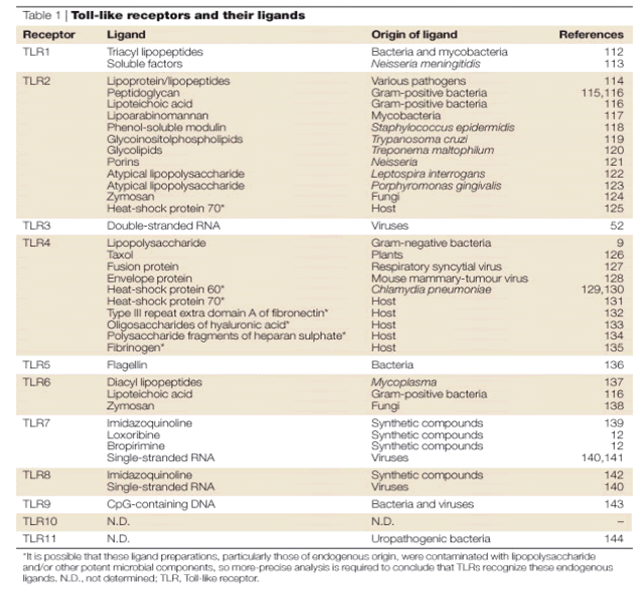
PRR(TLR/RLH) signalling pathway


PRR(TLR/RLH) signalling pathway 


TLR signaling pathway


TLR signaling pathway


PAMPs and PRRs interations during viral infections


The Major Histocompatibility Complex (MHC molecules) 


Expression and regulation of MHC genes 


Sumber : Bpk. Dr. Iskandar Zulkarnain

#posting tugas cyberprenership
    ahmad baihaqi
    NIM 1112503964

Innate immune cells and antigen recognition


Pattern recognition receptors(PRRs) and signaling pathways 


Sumber : Bpk. Dr. Iskandar Zulkarnain

#posting tugas cyberprenership
    ahmad baihaqi
    NIM 1112503964

Kamis, 21 Maret 2013

Cell Immune System


lymphoid progenitor cells


myeloid progenitor cells


Dendritic cells(DC) 


 follicular dendritic cell


Sumber : Bpk. Dr. Iskandar Zulkarnain

#posting tugas cyberprenership
    ahmad baihaqi
    NIM 1112503964


Rabu, 20 Maret 2013

Other Influences

Other Influences
   
    Numerous other influences can affect the health of the immune system as well. In societies where smoking is acceptable, for example, people are more at risk for lung cancer and respiratory ailments, both of which can lead to various secondary infections, including bronchitis. Second-hand smoke, or passive smoking, increases respiratory infections for both infants and children.

    Children who are exposed to second-hand smoke may be predisposed to pneumonia, allergies , and asthma as well as repeated irritations of the eyes, nose, and mouth. Nutrition, too, has an impact on the immune system. Malnutrition, with diets deficient in a variety of nutrients, such as certain vitamins, minerals, or protein, can cause increased vulnerability to infection. 

Immune Deficiencies
 
Immune deficiencies are conditions that impair the body's immune system so that it is less capable of fighting infection. Immune deficiencies arise when one or more of the parts of the immune system are missing or not working correctly, leaving the body less able to fight disease-causing agents. 

There are two types of these deficiencies: 

primary, or inherited, immune deficiencies and secondary, or acquired, immune deficiencies. The immune system has many parts that work together to protect the body from foreign invaders, such as microorganisms and toxins . When any segment of the immune system is absent or breaks down, it can lead to an immune deficiency. With so many elements of the immune system, there are more than 80 different types of primary immune deficiencies. They range from those that have severe and sometimes fatal effects to mild diseases that cause people few, if any, problems.

  Secondary immune deficiencies are much more common than inherited deficiencies. Unlike patients with primary immune deficiencies, people with secondary immune deficiencies are born with a healthy immune system, but sometime later in life the system becomes weakened or damaged.

  Both primary and secondary deficiencies typically lead to frequent infections and sometimes to additional medical problems, including certain cancers. These people often experience a variety of skin, respiratory, and bone problems as well, and they are more likely to have autoimmune diseases.


Immune Response In Vivo

Classification 

Serum Antibody titer
days after antigen exposure


Sumber : Bpk. Dr. Iskandar Zulkarnain

#posting tugas cyberprenership
    ahmad baihaqi
    NIM 1112503964


Compromised Immune Systems

Compromised Immune Systems

    Chronic diseases can wear down the immune system and make people more susceptible to infection. An immune system that is weakened in this way is said to be compromised. 

    Sickle-cell anemia , for instance, causes damage to the spleen . Because the spleen helps protect against bacterial infections, this leaves the body more vulnerable to infections, such as those involving the lungs, bone, and blood. As human immunodeficiency virus (HIV) infection damages and weakens the immune system, many kinds of infectious diseases that take advantage of a poor immune response can appear. In many cases, prompt diagnosis of such "opportunistic" infections and treatment with combinations of antiviral drugs have been able to slow this process , Certain drugs and therapy regimens also can undermine the work of the immune system. Chemotherapy drugs, a term for several kinds 

   In severe combined immunodeficiency, a person's ability to fight infections is severely impaired. This condition has been dubbed "bubble boy disease" and became widely known during the 1970s with the case of David Vetter, who lived for 12 years sealed in a plastic, germfree environment.

   Visuals Unlimited of drugs that destroy cancer cells, often kill the beneficial white blood cells in the bone marrow as well. Patients who have organ transplants are given high dosages of drugs called corticosteroids to suppress their immune systems and try to keep their bodies from rejecting the transplanted tissue, which typically is recognized as "foreign." 

  Some people's immunity is weakened from the beginning, because they are born with components missing from their immune systems.

   Primary immune deficiencies are genetic conditions that impair the immune system.
Hypogammaglobulinemia, a condition that arises when the body has fewer antibodies than normal, can result in more bacterial respiratory illnesses.

   Agammaglobulinemia, a complete lack of antibodies in the blood, can cause severe, often fatal infections.

Other primary immune disorders include these:
Severe combined immune deficiency syndrome, in which an infant is born with a significant lack of both B cells and T cells, often leads to serious immunity problems; it occurs in one in a million births. During the first 3 months of life, babies with this condition can experience life-threatening infections and diseases, particularly sepsis, pneumonia, and meningitis. Common childhood diseases, such as chicken pox, can easily overwhelm these patients' immune systems.
Chronic granulomatous  disease occurs in males when the body's phagocytes are ineffective against certain bacteria and fungi.
     
         Patients develop recurrent and unusual skin, lymph node , and other infections Repeated infections can lead to granulomas (gran-yoo-LO-muhs), masses that develop in the skin, lungs, liver , lymph nodes, and bones. They can be slow to heal and drain. 

Sumber : Bpk. Dr. Iskandar Zulkarnain

#posting tugas cyberprenership
    ahmad baihaqi
    NIM 1112503964


Immune Responses and Disease

Immune Responses and Disease
     Strong and healthy immune systems successfully ward off many diseases, particularly infections, but weakened immune responses can permit various diseases to develop.
Age can influence the immune system's effectiveness. Newborns and the elderly may have a weak or impaired immune response to antigens.
Newborns' immune systems are not fully developed at birth but typically become stronger during the first year of life. To strengthen their immune response, newborns can benefit from breastfeeding. 

    Immune systems that work but react incorrectly to the antigens within a person's body can lead to a number of immunological diseases. In autoimmune diseases, the body cannot distinguish between itself and foreign particles and may turn its disease-fighting powers on its own tissues, blood, and organs. Although no specific cause for this imbalance has been uncovered, hormones may be involved.

   Gender factors into who might experience an autoimmune disease. According to the American Autoimmune Related Diseases Association, of the more than 80 chronic autoimmune diseases, about 75 percent of cases occur in women, and women appear to be most vulnerable to these diseases during their childbearing years, when the levels of hormones are highest in their bodies.
Heredity seems to play a part as well. A person may inherit the tendency to have an autoimmune disorder but might not have the same disease a close relative has. For example, a grandmother may have rheumatoid arthritis , and the granddaughter may have lupus .
  
    These conditions are related in many ways, but they are different diseases. Some common medical conditions can put people at increased risk for infections. People with diabetes are especially prone to infection, in part because high levels of sugar in the blood can interfere with the functions of certain white blood cells. Patients with chronic lung disease are often at a high risk for pneumonia and bronchitis. 
    
     Urinary tract infections tend to occur more frequently among people born with abnormal urinary tracts or those who experience an obstruction, such as a kidney stone . People with certain types of heart disease, particularly of the heart valves, are more likely to have endocarditis, an inflammation of the inner lining of the heart (called the endocardium), after dental procedures or surgery. Chronic malnutrition that causes a protein deficiency in the body also can lead to immune problems, because immunoglobulins and other parts of the immune system are made up largely of proteins. 

Sumber : Bpk. Dr. Iskandar Zulkarnain

#posting tugas cyberprenership
    ahmad baihaqi
    NIM 1112503964

tanahsakti SUDUT KANAN ATAS